Shoe mechanics
Those first steps in the morning: five things to check on the shoes you already own
Five features separate a shoe that holds your heel from one that only feels soft in the store. Each one takes about ten seconds to test by hand.
It is the same twenty seconds every morning. Both feet hit the floor, the first three or four steps land like the floor is made of gravel, and by the time you reach the kitchen it has faded into something you can live with. Then you stand for six hours and it comes back.
KURU describes that exact moment in one of the ads it is running right now. The wording is worth reading closely, because it points at a piece of equipment rather than at your feet:
If your first steps in the morning feel like you're walking on a knife... this is for you. That sharp heel pain after rest? Classic plantar fasciitis. And the reason so many people stay stuck is simple... they're wearing the wrong shoes.
KURU Footwear, from one of its current ads
That is a claim about shoes, not a diagnosis, and it is the only kind of claim this article is going to make. What follows is a list of five things you can look at on a shoe, with your hands, in about a minute. The list is not ours. It comes from KURU's own campaign, and every line of it is quoted below.
First, the scale of the thing
KURU publishes an annual survey called the Foot Pain Trends Report. The 2025 edition is medically reviewed, and it draws on responses from 2,000 American adults who reported foot pain between November 2023 and October 2024, with a stated margin of error of plus or minus 3 percent. These are the numbers it puts on an ordinary morning.
KURU Footwear, 2025 Foot Pain Trends Report
The same report names plantar fasciitis as the most commonly reported cause of heel pain, at 11 percent of respondents, and describes the symptom as sharp, stabbing pain in the heel and arch, often most severe during the first steps in the morning or after long periods of rest. Full report.
Read the last two figures together and you have the situation most people are in. Four out of five have had it. Two out of three had it this year. Only one in three ever got a name for it from a professional. Which means the decision that actually gets made, for most people, is not a treatment decision. It is a shopping decision, taken in a shop, in about four minutes, using the only test anybody ever runs.
The four minute test, and why it fails
You press your thumb into the midsole. It gives. You bend the shoe. It bends easily. You put it on, walk to the mirror and back, and it feels like a cloud. You buy it.
Every one of those signals is a softness signal, and softness is the one property that costs you nothing to add and tells you almost nothing about what the shoe will do at hour six. KURU's own campaign says so in a sentence that is unusually blunt for a shoe company talking about shoes:
Soft and bendy feels comfortable in the shop... but it overloads your arch all day.
KURU Footwear, from one of its current ads
The five checks below replace the softness test. None of them needs a shop, a fitting or an appointment. Do them on the shoe you wore yesterday.
The heel counter: squeeze the back of the shoe
The heel counter is the stiffened cup built into the very back of the upper, behind your heel bone. You cannot see it. You can feel it in two seconds.
The ten second version
Hold the shoe in one hand. Put your thumb on one side of the heel and your forefinger on the other, level with the top of the sole, and squeeze.
Here is what KURU's campaign says the counter is for, word for word: "You want the back of the shoe to feel solid. This limits excessive pronation and keeps the ankle stable."
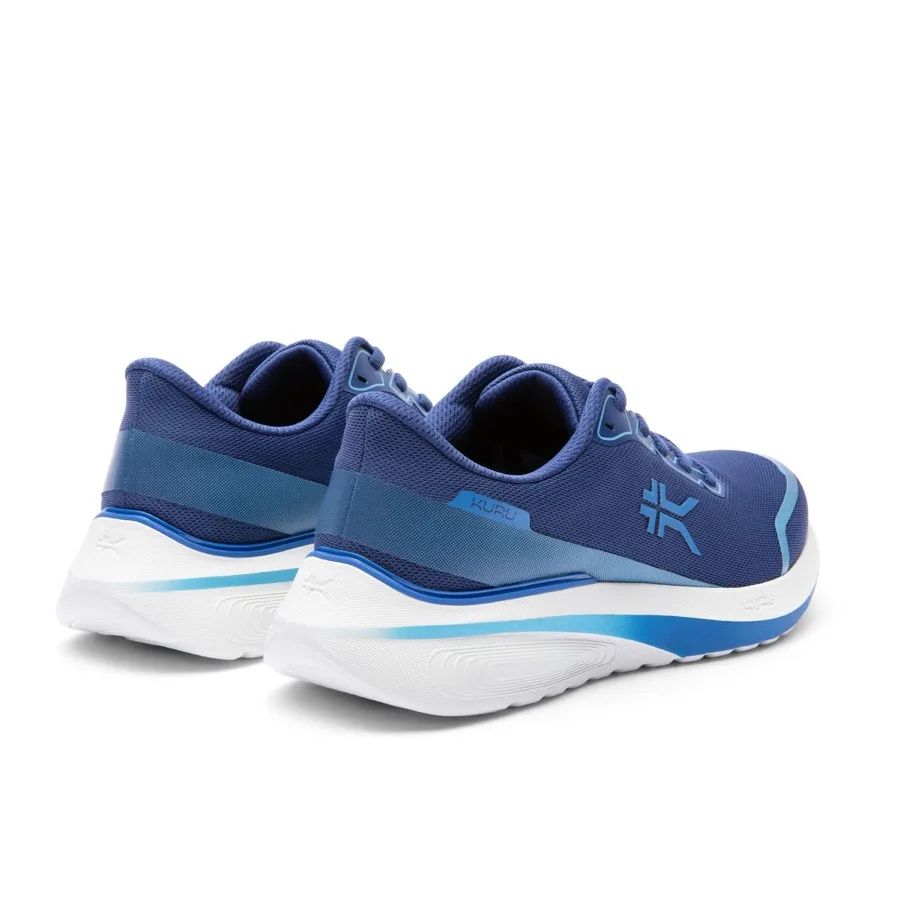
The heel cup: pull the insole out and look at the shape
This is the one the diagram at the top of this page is about, and it is the check almost nobody runs, because it means taking the insole out.
The ten second version
Lift the insole out of the shoe. Look straight down into the heel of the shoe underneath it, then run your fingertip around the inside edge.
KURU's version of the point: "It should wrap around your heel bone and spread pressure evenly. This reduces strain through the inside of the heel." On its own technology page the company puts the same idea in one line, and it is the best sentence on their site: "Your heels are round. It's time your shoes understood that."
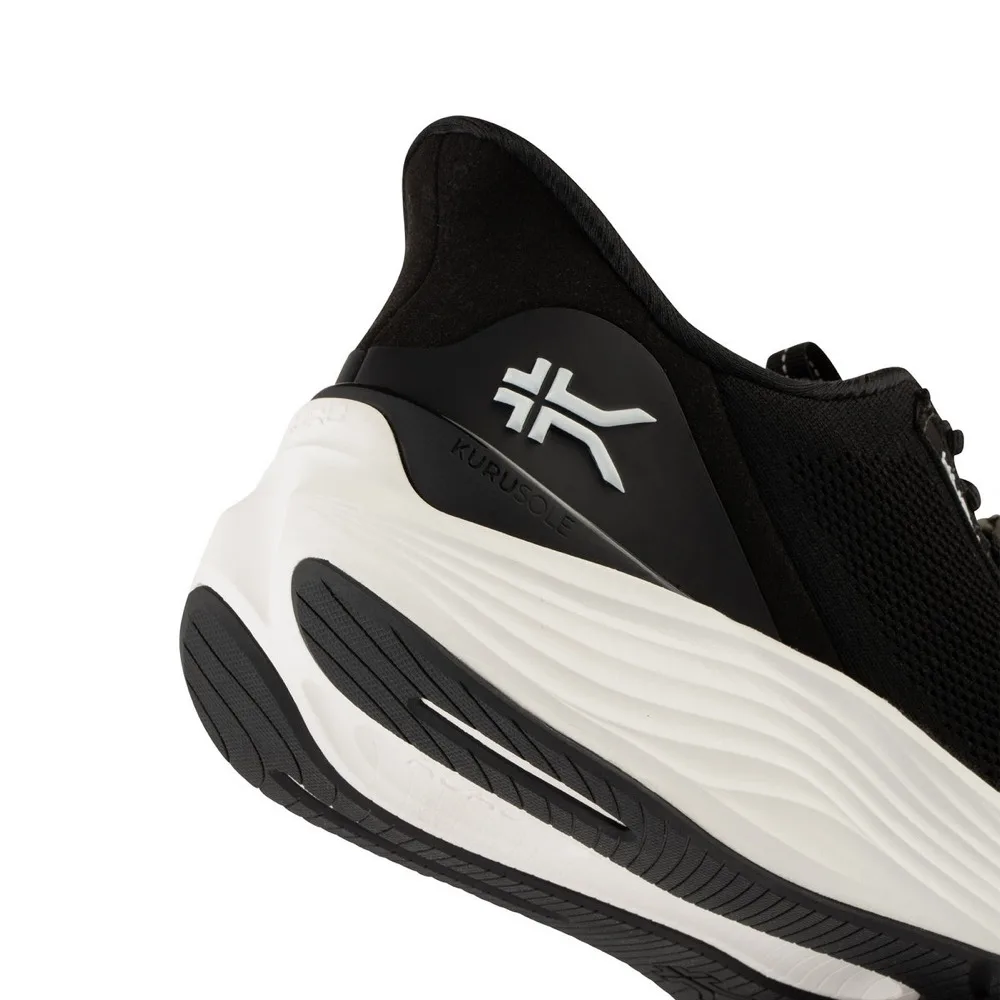
The shape has a name in their catalog. KURUSOLE is the patented part, the piece the whole company was built around, and it is molded into the outside of the heel where you can see it.
The drop: put the shoe on a table and get your eye down to it
Drop is the difference in thickness between the platform under your heel and the platform under the ball of your foot. A high drop tilts you slightly forward. A zero drop shoe holds your foot level.
The ten second version
Stand the shoe on a flat table. Crouch until your eye is level with the table and look at the sole from the side.
KURU's line on it: "A thicker heel compared to the forefoot reduces strain on your calf, arch, and plantar fascia."
They also publish the figure, in millimeters, on every product page, which plenty of brands do not. If you want to skip the crouching, look for the line that says heel to toe drop.
Heel to toe drop, as published on kurufootwear.com
Midfoot stiffness: try to fold it, then try to wring it
Two tests here, and they are the ones that reveal the most about a shoe you already own, because a worn-out shoe fails them long before it looks worn out.
The ten second version, twice
Fold. Hold the shoe by the heel and by the toe and push the two ends towards each other.
Wring. Hold it the same way and twist your hands in opposite directions, the way you would wring out a cloth.
KURU's line: "If you can easily twist or fold the shoe, it is too soft. A firmer shoe gives your foot the stability it needs while healing." Their campaign opens the same ad with the instruction in plain language: "stop wearing shoes that fold in half."
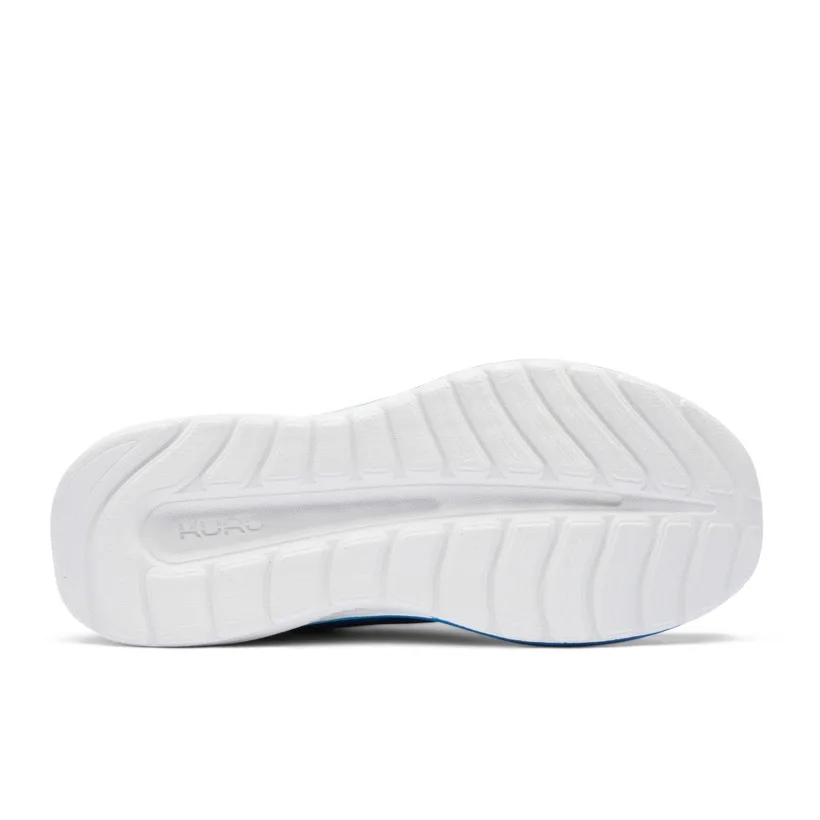
Check 5The rocker: push down on the toe and see whether it rolls
A rocker is a slight upward curve at the front of the sole. It is the least intuitive of the five and the easiest to see once you know to look.
The ten second version
Set the shoe flat on a table and press down on the toe with one finger. Then look at where the front of the sole meets the table when the shoe is at rest.
KURU's line: "This helps roll you forward so you are not overloading your big toe and arch with every step."
Now go and count
Take the pair you wore yesterday. Run the five tests. Write the score somewhere. The point of the exercise is not that one particular pair is bad, it is that the shoe you spend eight hours a day standing in has probably never been checked against anything except how it felt for four minutes in a shop.
- Firm heel counterSqueeze the back. It should resist.
- Deep heel cupInsole out. There should be a bowl, not a floor.
- Higher heel to toe dropEye level with the table. The heel end should be thicker.
- Midfoot stiffnessIt should refuse to fold in half and refuse to wring.
- Slight rockerThe front should curve up off the table.
The same campaign that lists those five also puts a limit on them, and it is worth repeating because it is the honest part: "The right shoe will not cure plantar fasciitis overnight... but the wrong shoe will slow your recovery down." A shoe is equipment. It is not treatment, and nothing on this page is medical advice.
What KURU built, and what they claim for it
KURU is a Salt Lake City footwear company. On its own about page the founder and chief executive, Bret Rasmussen, writes that he first dreamed of starting a shoe company in fifth grade, and dates the launch of the heel hugging sole technology to 2008. Everything the brand sells is built on three named layers.
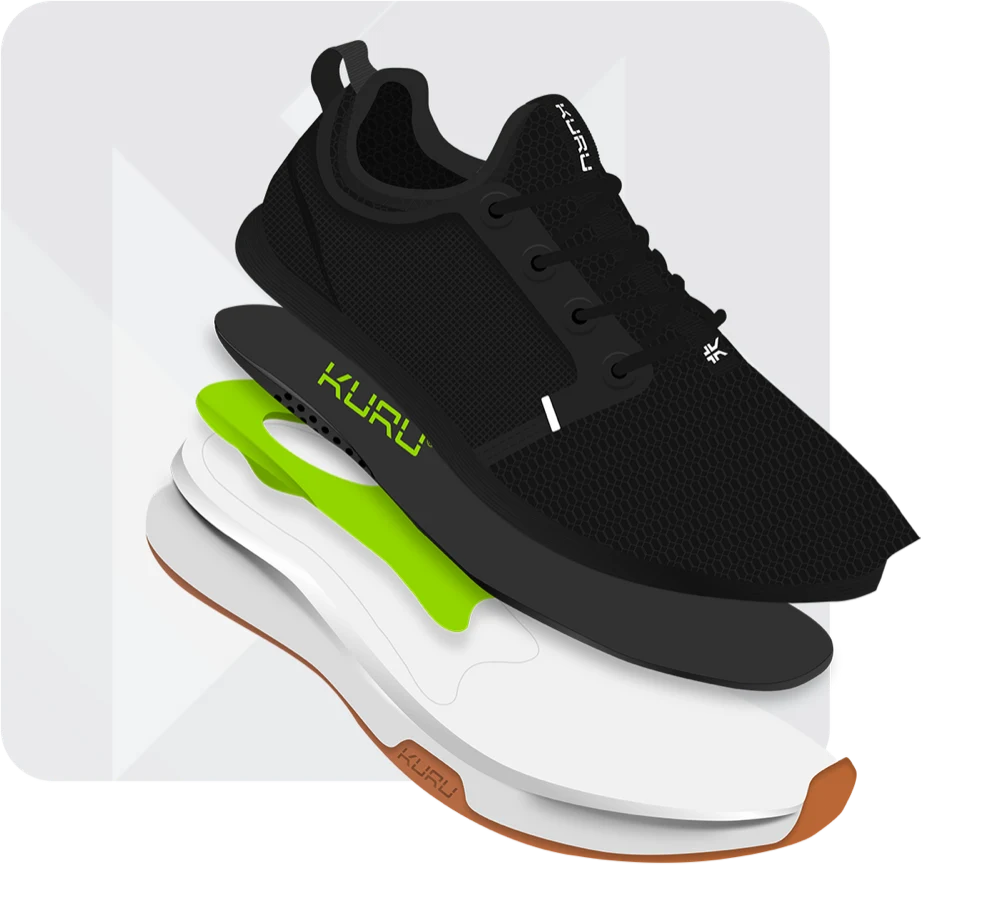
The patented part, and check 2 on the list above. KURU describes it as technology that dynamically flexes to hug and protect your heels.
Dual density foam that KURU says provides superior arch support, and that softens and molds to your feet with wear.
The midsole. Lightweight EVA foam that KURU says delivers shock absorbing cushion.
In KURU's own words, on its own site
Three claims the company publishes about the results, quoted rather than paraphrased so you can weigh them yourself. On its technology landing page KURU states that "72% of customers report pain relief" and that 97 percent of them feel it in under four weeks. The same page counts over 3 million pairs sold, and its reviews page shows 69,453 ratings. The curved heel design, the company writes, "protects the body's natural cushioning system", which it names as the heel pad.
Figures as published on kurufootwear.com on August 14, 2026. They are the company's own, not an independent measurement.
What customers write, unedited
These are published on KURU's own site, under the names their authors chose.
"I have had plantar fasciitis for about 4 months now, I have used rollers, sleeves, stretching, other shoes, inserts, etc. They all have helped but I could never really walk without pain. KURU shoes are wonderful I can walk with almost no pain and without limping."
Roberto E., on kurufootwear.com"I think these are the most comfortable shoes I've worn since I started wearing shoes! I have flat feet and plantar fasciitis so I've tried a ton of shoes and these are the ONLY shoes that alleviate my pain!"
Dawn D., on kurufootwear.com"Working in a restaurant for more than eight hours a day my feet were killing me at the end of my shift. A friend of mine suggested me to get KURU shoes and I did, it was the best thing I ever did for my feet, the support and comfort is incredible, and the quality standards are upstanding."
Alejandro M., on kurufootwear.com"I just returned from three weeks in Italy and Greece, walking 5 to 10 miles per day over uneven, cobblestone streets. My feet should have been miserable at the end of the day, but they were not."
Janet2044, on kurufootwear.comThe part most brands leave out
If you buy a shoe built around a shape rather than around softness, the first two weeks can feel wrong. KURU says this on its own site, in a support article you have to go looking for, and it is the most useful page they publish.
While it's not common, some customers experience tenderness when they first start wearing a new pair of KURUs. You're more likely to experience this initial pain or tenderness if you've never worn custom orthotics before.
KURU Footwear, why are my feet sore after wearing KURUs
They publish a break-in schedule with it. If you buy a pair, follow it, because a shoe judged on day one is being judged on the wrong day.
- Weeks 1 and 2Wear them 2 to 3 hours a day, then switch to another pair.
- Weeks 3 and 4Wear them 3 to 5 hours a day, then switch again.
- After thatThe insole foams have reacted to your body heat and molded to the shape of your feet.
The reason that schedule is safe to follow is the return window behind it. KURU's stated policy is 91 days of returns and exchanges, free shipping on United States orders, and the wording on its own landing page is "If we can't improve your foot pain in 91-Days, return the shoes for a full-refund, no questions asked." Ninety-one days is longer than the break-in period by a wide margin, which is the only reason the break-in period is a reasonable thing to ask of a customer.
Who this is for, and who it is not for
Worth an hour of your time if your first steps in the morning are the worst steps of your day, if you stand on hard floors through a long shift, or if you have already cycled through inserts, sleeves and rollers and are still limping to the kitchen. The five checks cost nothing and they will tell you something about the pair you already own.
Not the right page if your pain is severe, if it is getting worse, if it followed an injury, or if it has stopped you doing things you need to do. That is a conversation with a clinician, not a shopping decision, and KURU's own report is blunt about how few people have that conversation: only 32 percent of adults with foot pain received a formal diagnosis in 2025, down from 37 percent the year before.
Where to start if you want to try the shape
KURU sorts its catalog by the problem rather than by the category, so the shortest route is the plantar fasciitis collection. The ATOM 2 is the first shoe listed in both the men's and the women's version of it, at 169 dollars. The KINETIC 2 and the APOGEE Luxe sit in the same collection if you want something built for training or for the office.
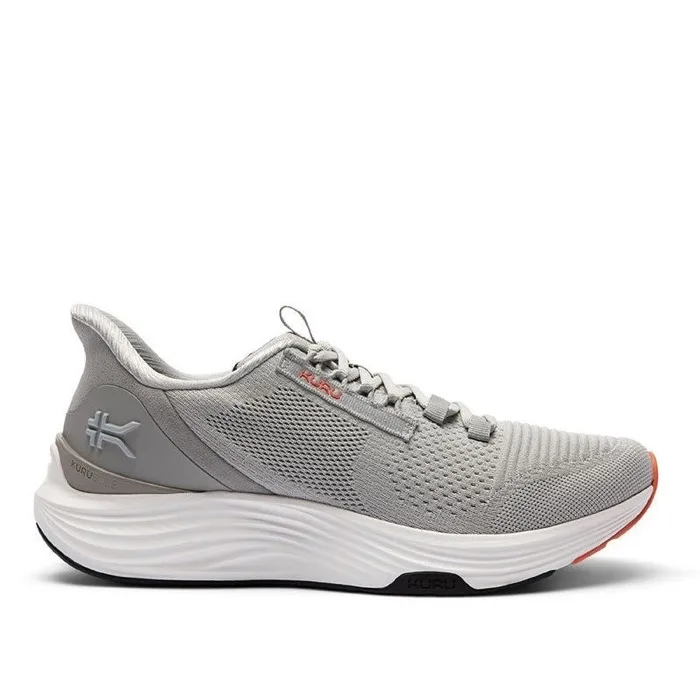 ATOM 2Men's, 169 dollars, 10mm drop
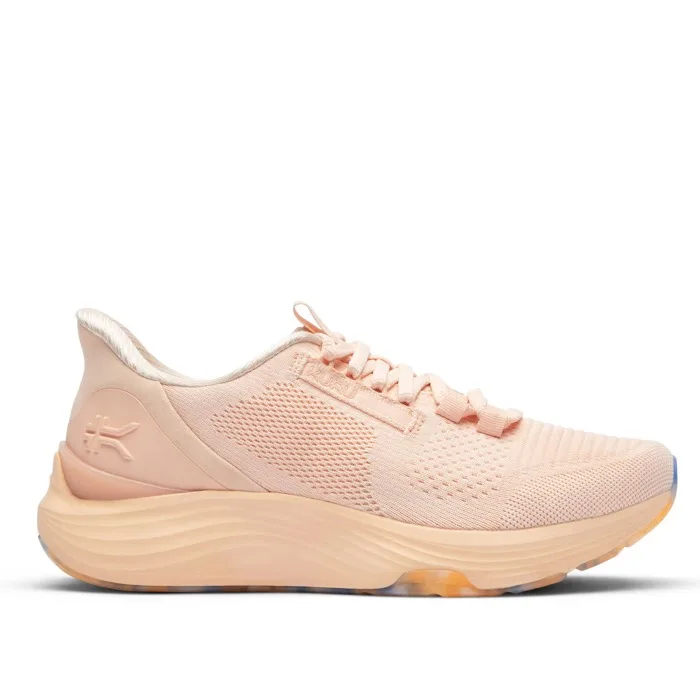 ATOM 2Women's, 169 dollars, 10mm drop
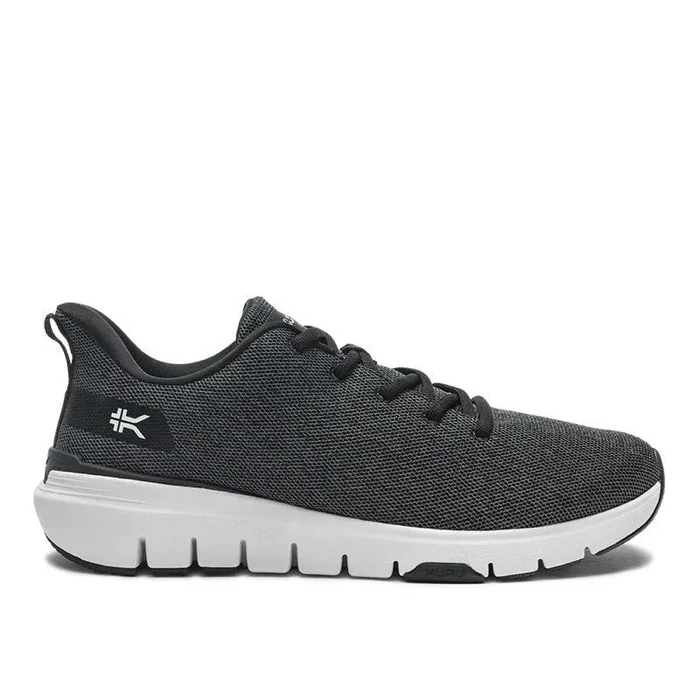 FLEX ViaAdjustable fit, 129 dollars, 11mm drop
DASH VantaWalking, 119 dollars, 9mm drop
FLEX ViaAdjustable fit, 129 dollars, 11mm drop
DASH VantaWalking, 119 dollars, 9mm drop
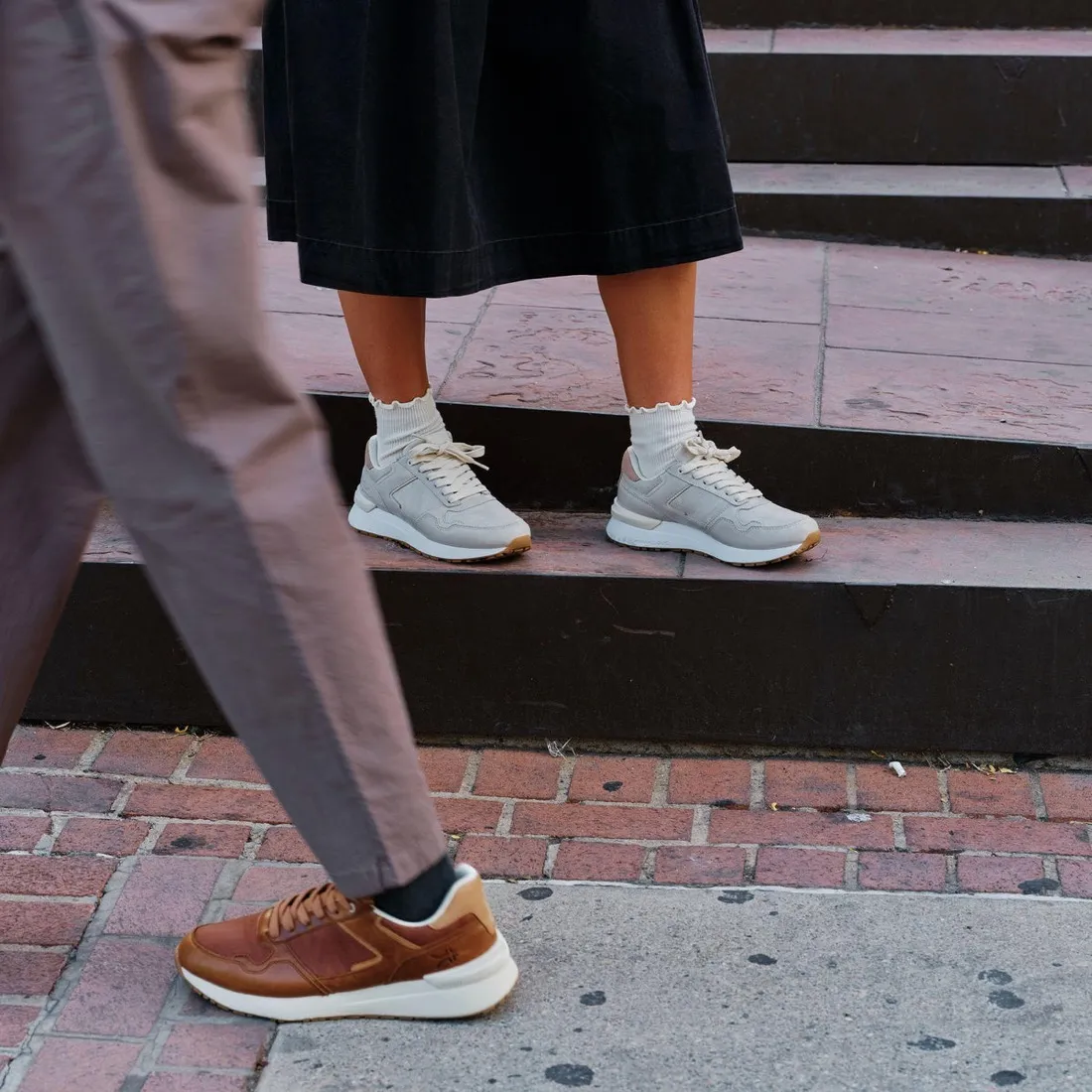
91 day returns and exchanges. Free shipping in the United States.